
Identifying the Early Signs of Bed Bugs Before They Spread
Waking up with mysterious, itchy welts is a surefire way to ruin your morning. For residents in Toronto condos and suburban homes alike, the mere thought of a pest infestation is incredibly stressful. Because these insects are expert hitchhikers, picking them up on transit, at a hotel, or from a neighboring unit is surprisingly easy.
The key to minimizing the disruption to your life is catching the problem early. Waiting until you see dozens of live insects means the infestation has already taken hold, making the eradication process longer and more complicated. If you know exactly how to spot early signs of bed bugs, you can stop them in their tracks before they multiply, spread to other rooms, or force you into a panicked furniture-tossing frenzy.
Where to Check Mattress for Bed Bugs
When trying to determine if you have an uninvited guest, the most logical place to start is your bed. These pests prefer to stay as close to their food source as possible, meaning they will nest within a few feet of where you sleep.
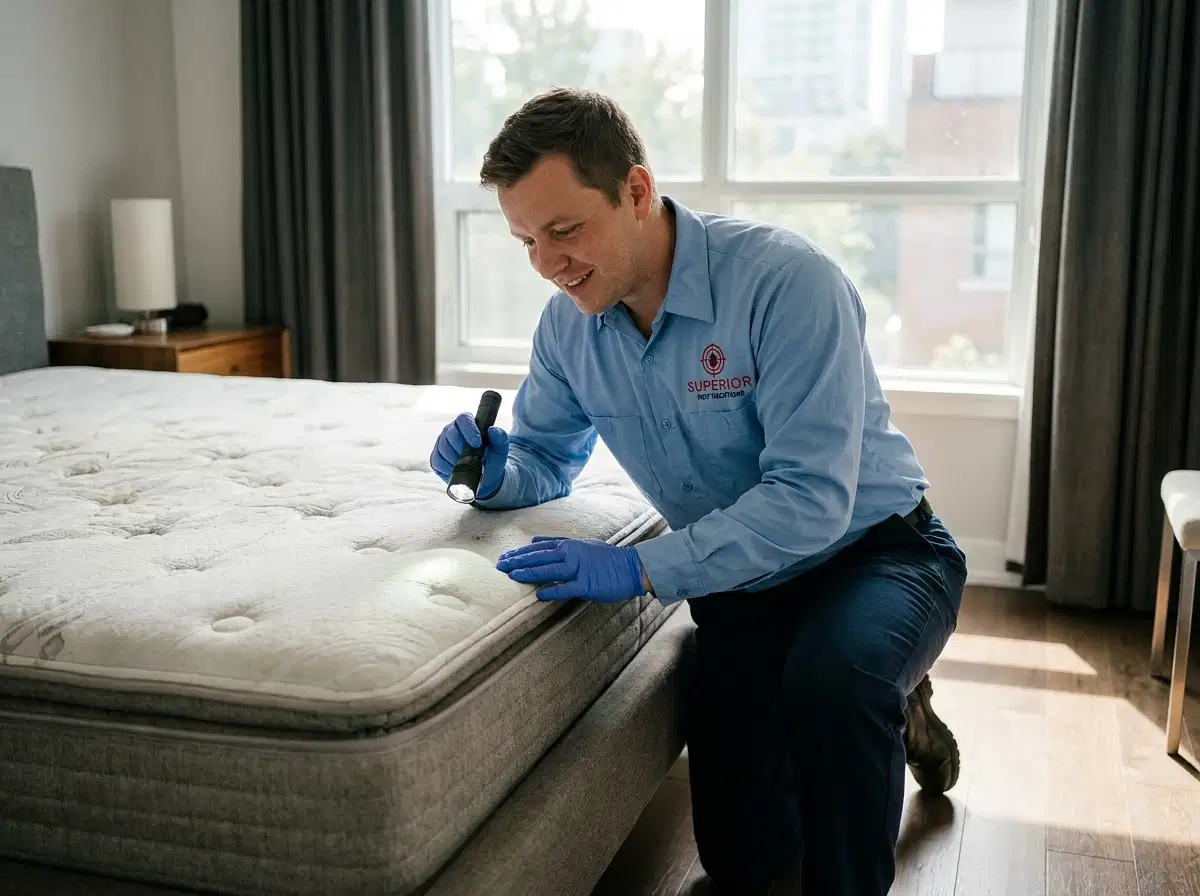
Knowing exactly where to check mattress for bed bugs will save you time and help you find evidence while the population is still small. Start by stripping your bed completely bare. Use a bright flashlight and carefully examine the seams, piping, and tufts of the mattress. You should gently pull the seams apart, as the insects love to squeeze into tight, dark crevices.
Don't stop at the mattress, though. You should also inspect the box spring, paying special attention to the plastic corner guards and the staple line where the dust cover meets the wood frame. Finally, check the joints of your bed frame, the back of your headboard, and even nearby nightstands or electrical outlets.
Visual Clues: What Do Bed Bug Fecal Stains Look Like?
Because live bed bugs are nocturnal and exceptionally good at hiding, you are much more likely to see the evidence they leave behind before you see an actual bug. One of the most definitive indicators of a developing infestation is pest excrement.
So, what do bed bug fecal stains look like? Unlike dirt or dust, which can be easily brushed away, these stains look like tiny, dark brown or black dots that resemble the marks left by a fine-tip permanent marker. Because the insects feed entirely on blood, their waste is liquid and quickly absorbs into fabric. You will typically find these ink-like spots clustered along mattress seams, on your sheets, or on the wooden slats of your bed frame.
In addition to fecal spots, keep an eye out for small rust-colored stains on your bedsheets. These occur if you accidentally crush a bug while rolling over in your sleep. You might also find tiny, translucent yellow shells hiding in the seams. These are shed skins, which the insects leave behind as they grow and progress through their life cycle.
How to Tell Bed Bug Bites From Other Bites
Often, the very first indicator that something is wrong comes from your own skin. However, diagnosing a pest problem based solely on bites can be tricky. It is incredibly common to confuse these marks with mosquito bites, spider bites, or even a mild allergic reaction.
If you want to know how to tell bed bug bites from other bites, look for patterns. While a mosquito bite is usually isolated to areas of skin exposed outdoors, bed bug bites tend to appear in clusters or a distinct line of three or four welts (sometimes referred to as "breakfast, lunch, and dinner"). These bites usually show up on areas of the body that are exposed while sleeping, such as your arms, neck, face, and shoulders.
They are often intensely itchy, red, and slightly swollen. Unlike flea bites, which usually occur around the ankles and have a bright red center, bed bug welts lack a distinct center puncture mark. It is also worth noting that different people react differently to the saliva; some individuals may not show any bite marks at all, which is why relying on visual mattress inspections is so critical.

What to Do If You Find Evidence
Discovering signs of an infestation in your home can induce immediate panic, but the most important thing you can do is stay calm. Do not start throwing your mattress or furniture away, as carrying infested items through your home or hallway can easily spread the bugs to other rooms or neighboring units. Furthermore, do-it-yourself retail sprays are generally ineffective against established populations and can simply drive the pests deeper into your walls.
When dealing with these resilient pests, you need a discreet, highly effective, and professional approach. At Superior Pest Solutions, we know that fast eradication and family safety are your top priorities. That is why we highly recommend our specialized Bed Bugs Heat Treatment service.
Unlike traditional chemical applications that require multiple visits and extensive, stressful preparation, our heat treatment is a single-day process. By safely raising the ambient temperature of the affected rooms to a level that is lethal to all stages of the insect's life cycle—including the unhatched eggs—we can completely eliminate the problem in one go. It is a 100% eco-friendly, pet-safe solution that allows you to return to your home the very same day with total peace of mind.
If you have noticed any of the early warning signs mentioned above, don't wait for the problem to multiply. Learn more about our comprehensive approach to Bed Bugs and reach out to our licensed experts. Contact us at Superior Pest Solutions today to schedule a thorough inspection and reclaim your good night's sleep.